What Is This Antique Key Really For?
What Is This Antique Key Really For?
Introduction
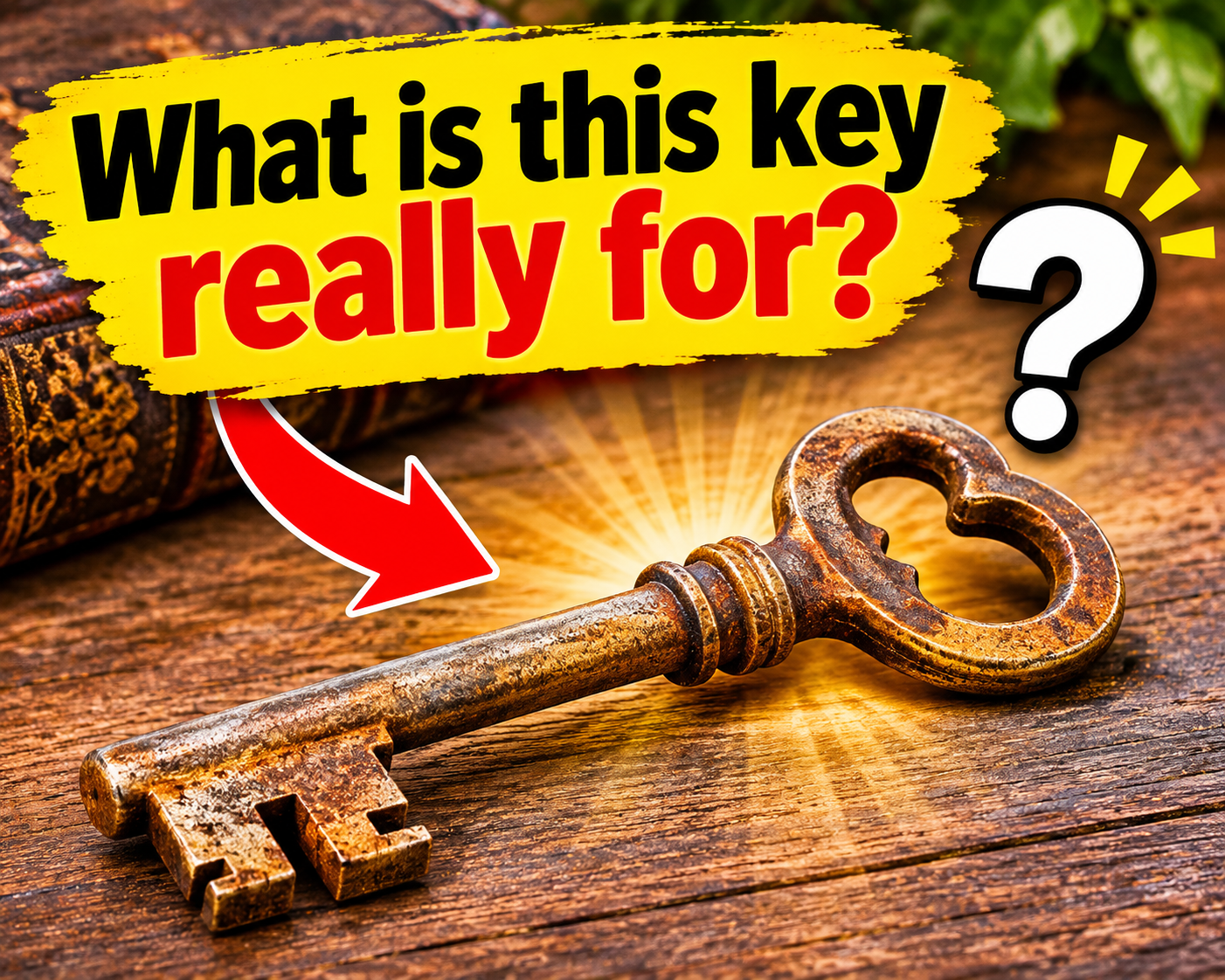
An old brass-colored key with a decorative bow and a chunky bit is full of mystery. Does it open a door, a trunk, a cabinet or something else? This guide shows you how to read the clues in the key itself, narrow down its purpose and test your theory safely.
Step 1: Examine the Key’s Parts
What to do: Study each part of the key.
How to do it: Look at the bow (the decorative loop you hold), the shank (the shaft) and the bit (the toothed end). On this key, the bow has a clover or heart shape, the shank looks hollow where it meets the bit, and the bit has two simple notches. A hollow shank usually means the key slides over a fixed pin in the lock. Measure the length and the bit width, since small keys usually fit furniture, while larger ones fit doors.
Common mistake to avoid: Judging by age or decoration alone. Many unrelated locks used similar-looking keys.
Step 2: Match It to Likely Locks
What to do: Compare your key with common uses.
How to do it: Small to medium barrel keys often fit cabinets, desks, chests, boxes and wardrobes. Larger ones, especially with heavy bits, suit interior doors and gates. Keys with a hollow barrel and simple bit are common on older European furniture and doors. Check old furniture, trunks or doors in your home or family property to see which locks have a pin inside the keyhole.
Common mistake to avoid: Forcing the key into a lock that doesn’t match. It can damage the lock, the key or both.
Step 3: Test and Research Carefully
What to do: Try it gently and get expert input.
How to do it: Insert the key slowly into a likely keyhole and see if it slides over the pin and turns smoothly. If it doesn’t fit, stop. Photograph the key from several angles and compare it with online catalogs of antique keys, or ask a locksmith or antiques dealer. Any maker’s marks or numbers on the key can help identify its origin.
Tips for Better Results
- Tip 1: Photograph both sides of the key.
- Tip 2: Measure the key’s length and bit.
- Tip 3: Check old locks for a center pin.
- Tip 4: Try the key gently without force.
- Tip 5: Don’t over-clean it, since patina is part of its value.
- Tip 6: Note where you found the key, as it may hint at its use.
- Tip 7: Ask antiques or locksmith communities with clear photos.
- Tip 8: Store it dry to prevent more rust.