Many People Are Guessing: What Kind of Meat Is in the Picture? Can You Recognize It?
Many People Are Guessing: What Kind of Meat Is in the Picture? Can You Recognize It?
Introduction
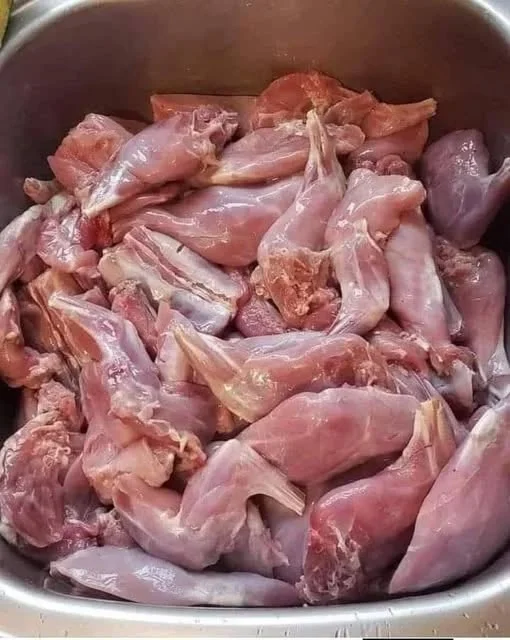
A tray of pale pink, skinless meat in odd-shaped pieces can stump even experienced cooks. This guide shows you how to identify it by looking at color, shape and bone structure, how to confirm your guess, and how to cook it safely. By the end, you’ll be able to recognize rabbit, the most likely answer here, and tell it apart from similar meats.
Step 1: Look at Color and Texture
What to do: Judge the meat by how it looks.
How to do it: Rabbit is pale pink to light red, very lean, and has little visible fat. The surface looks smooth and slightly glossy, with thin silvery membranes on some pieces. Chicken is usually lighter and often has skin or a yellowish fat layer. Beef and lamb are much darker red.
Common mistake to avoid: Relying on color alone. Lighting and freshness change how meat looks.
Step 2: Check the Shape and Bones
What to do: Study the cuts.
How to do it: Look for long, slim hind legs, short front legs and narrow pieces of the saddle (the back) with small rib sections. Rabbit’s hind legs are meaty and tapered, and the leg bones are thin and slender. These proportions are the strongest clue in the picture.
Common mistake to avoid: Confusing small hind legs with chicken drumsticks. Rabbit legs are longer and narrower, with a distinctive joint shape.
Step 3: Confirm and Cook Safely
What to do: Verify the source and prepare it properly.
How to do it: Buy from a trusted butcher or market and ask what the meat is. Keep it refrigerated and cook it thoroughly. A common food-safety target for rabbit is an internal temperature of about 71 °C (160 °F). Because the meat is lean, cook it gently: braise, stew or roast with some fat or liquid so it doesn’t dry out.
Tips for Better Results
- Tip 1: Ask the seller what the meat is and how it was processed.
- Tip 2: Compare it with photos of rabbit, chicken and young game.
- Tip 3: Rinse and pat it dry before cooking.
- Tip 4: Marinate with acid or herbs for flavor and tenderness.
- Tip 5: Brown the pieces first, then simmer slowly.
- Tip 6: Use a thermometer to check doneness.
- Tip 7: Keep raw meat away from other foods.
- Tip 8: Refrigerate leftovers quickly.